

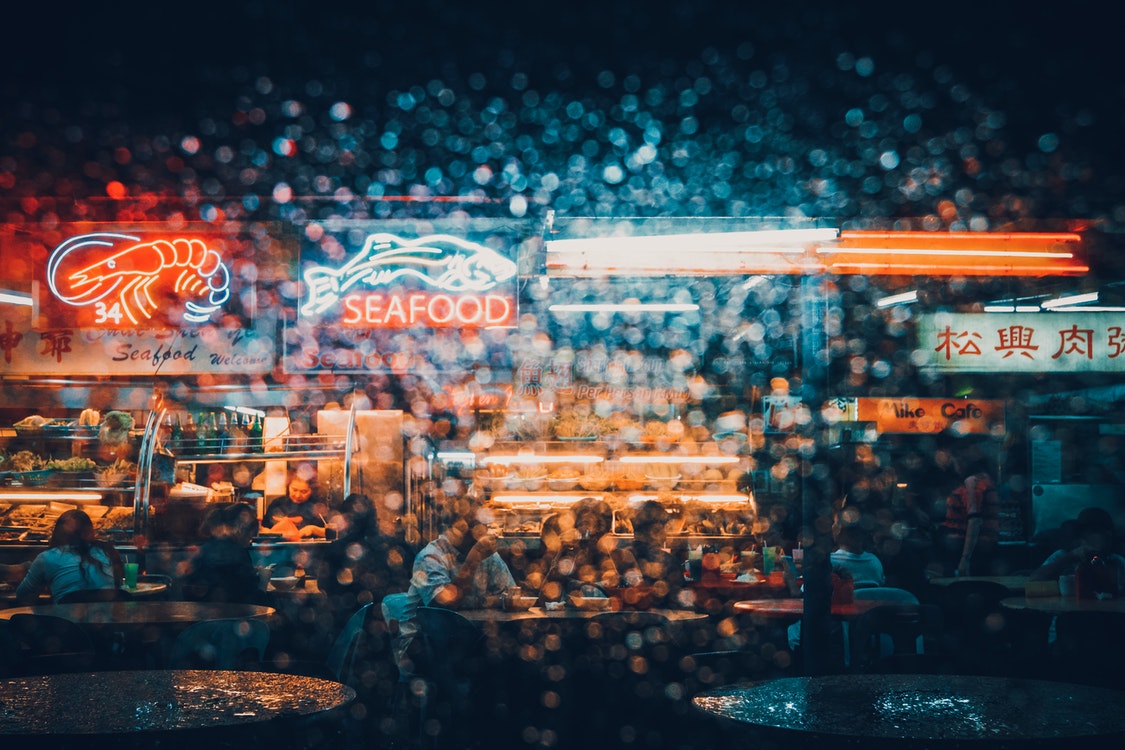
If you have ever wondered how neon lights get their color, read this article. You will learn the basic principles behind neon lighting, including its origin, color, and techniques. In this article, we will discuss the origin of neon gas, the main colors of neon, and ways to produce other color-based lights other than orange-red. If you’d like to learn more, read on. Then, you can use these tips to make your own neon light.
Color of Neon Light
When electricity passes through a neon light, it emits a brilliant orange-red color. While neon is the most common color of neon, other noble gases can also produce colored light. These gases include argon, helium, krypton, and xenon. The reddish-orange glow produced by neon is the most familiar. However, other colors are possible when the gas is mixed with phosphor-coated glass.
Neon colors are often associated with warning or danger and are used in high-visibility clothing and signage. In the 1930s, inventor Bob Switzer discovered that fluorescent paint can be used to create neon colors. He first experimented with fluorescent minerals in the air and eventually mixed wood varnish with them. The paint was called Day-Glo and was eventually used to make high-visibility jackets for World War II soldiers.
In contrast, CMYK color wheels do not have any neon colors. This is because traditional painters’ color wheels do not feature this type of color. In addition, fluorescent colors have to emit light to appear fluorescent. This is why the colors of neon are more difficult to achieve with conventional methods of print design. Consequently, they are often used by designers. Listed below are some examples of neon colors. Once you have a basic understanding of neon, you can create vivid and eye-popping visual effects.
If you want to add a little fun to your neon sign, you can buy a Dynamic Color system. This kit can add a splash of vibrant color to any sign. These lights can be set to single, double, or triple colors. This product is controlled by a smartphone app. It is important to note that there is no remote included. You can adjust the colors yourself, but the price of this kit is worth every penny.
Source of Neon Gas

The neon gas used in neon lights from the Neon Mama team is composed of helium and oxygen, which are then fused to create neon. The gas is colorless without an electrical current and is the most abundant isotope of helium. The average American home contains 10 liters of this gas. It can be found in neon signs, advertising signs, and discharge display tubes. It is also found in our bodies, but we rarely think about the gas’ origins.
The most common source of neon is found in the lungs and is the main component of a neon light. A typical neon lamp consists of two electrodes that are set inside a small glass envelope. These electrodes are connected with two wire leads made from tin-plated Dumet metal. Both the high-brightness and standard-brightness lamps contain pure neon. To produce a wide range of colors, manufacturers manipulate the glass to add fluorescent powders or glass coloring to the neon gas.
Noble gases are a group of nonflammable gases. The most common type is called neon-20. Other forms of neon include neon-25 and neon-26. Neon has three stable isotopes. It can also be found in the form of a compound with fluorine, the most reactive element in the periodic table. It is also used to fix measurement points for the International Temperature Scale. Both the liquid and gas are relatively expensive to produce, so they’re usually recovered from the air.
The element neon is found naturally in the atmosphere. Several scientists have studied the gas. In 1898, British chemists William Ramsay and Morris Travers isolated the gas from its natural state. The discovery led to the development of neon signs and other devices. The gas’s red-orange color was first observed by William Ramsay and Morris Travers, who named it ‘neo’ from ancient Greek. In 1902, neon was sold in industrial quantities. By 1912, neon signs began to appear on the streets of Paris.
Ways to Produce Other Colors of Light Besides Orange-Red
Different coatings for the glass of neon tubes allow a wider range of colors than the orange-red classic color. While the classic red and blue neon tubes are transparent and blue neon glass, other colors of neon light can be produced through a series of chemical and physical processes. To produce pink, purple, and green neons, fluorescent powders are added to the glass. For orange neons, glass coloring is used.
In contrast, traditional painters’ color wheels do not include neon hues, which are produced through chemical processes. Because neon emits light, it is difficult to achieve with traditional print design methods. To achieve neon colors in print, neon is a rare color. The color wheel of a traditional painter would only show orange-red and red-orange hues. This is why neon hues are difficult to produce by using traditional methods.
Neon lights can be made in any color, depending on how the gas reacts to electricity. The most common solution is to use an RGB LED chip. The RGB controller allows the user to change the intensity of each color diode. Different gas mixtures can result in a wide range of colors. These are just a few examples of the colors produced by neon. They are often used in neon signs, as well as other products requiring a high level of brightness.
Some other ways to produce neon signs other than orange-red include using green fluorescent coatings. In addition to these methods, neon signs can be fabricated with artful designs, such as letters or pictures. The main application of neon tubes is for multi-colored glowing signage. These signs were common in the 1920s through the 1980s. The popularity of these signs was due to their striking and vibrant colors.
Techniques for Creating Neon Light
There are several different techniques you can use to create a neon light glow. The first step is to make a copy of your text or object. Press Ctrl+C to copy the object and use the same shortcut as before. Now you will need to change the color to a lighter shade. This is what you will use to create the glow. Once you have completed this step, you can now apply the effect.
This video tutorial will show you how to create a realistic glow around a person. The tutorial doesn’t have any voice-over or music, but it features subtitles to help you along the way. The subtitles are easy to follow and explain the steps clearly. The eight-minute tutorial covers the essential details. It is highly recommended and is well worth the time. You can find out more about how to create a neon glow in Photoshop.
Next, create a text effect. To create a text effect, create a dark fill with a color that is similar to the one you used in the image. Alternatively, you can recreate the color in Photoshop by creating a new swatch and editing the original. Then, use layers to create the effect of a neon light glow. The technique works best for text. If you’re unsure about how to create a glow, make sure to check out some tutorials to learn more.
Once you’ve completed this step, you can move on to the lettering. Using a black brush, select the mask and then paint over it with a white paint marker. Use a similar technique to create an orange glow. After applying the glow, Adam starts working on the lettering. Once he’s finished, he adds a shadow, and it’s ready for the letters. It will look great once it’s done!
Long Region of Glowing Gas
A long region of glowing gas is what gives neon lights their bright glow. The excitation of electrons in noble gases releases a characteristic photon with a specific wavelength. When this light strikes an object, it is known as light. But what is the source of this light? We’ll explain that in this article. The glow we see in neon lights comes from a molecule of hydrogen.
The gas responsible for giving neon lights their color is the same as that of arcogen, which gives them a blue or purple glow. Both gasses are relatively rare and contain high energy. Adding electricity energizes the electrons in the gas and releases this energy as light. It’s not entirely clear why one particular gas produces the other, but the amount of electrons varies. The longer the gas has a long region of glowing, the more intense the color.
This chemical reaction results in a long region of glowing gas near the cathode. The long region of gas creates a strong electric field around the neon tube. The gas breaks down in these regions when it’s exposed to a strong electric field. There are two kinds of gas: the positive and the negative, or ‘corona’. If argon and helium had equal strengths, air would have a corresponding glow.
Before any chemistry takes place in the tubes, they have to be vacuumed to remove moisture and air. After that, the team uses electricity to raise the temperature. Once the tube is heated to the correct temperature, they then wait for it to cool down to ensure the process is complete. The gases are what give neon lights their color. So, a neon sign can be a great way to advertise your business.